
Biliran is one of the smallest provinces in the Philippines. It is not a well-known travel destination and is often mistaken for part of Leyte. However, despite its seemingly insignificant location on the map, Biliran offers an abundance of spectacular attractions. This province seems to have everything—from unspoiled islands and beautiful beaches to towering mountains and vast expanses of lush greenery. To top it all off, Biliran is home to over 30 stunning waterfalls.
During my visit, I had the chance to explore four of the most accessible waterfalls. Don’t be misled by the term “accessible,” as I do not mean easy. Let me share my experiences with each of them.
BAGONGBONG FALLS


Bagongbong Falls was the first waterfall I visited after disembarking from the boat at Kawayan Port, returning from Sambawan Island. The journey to the falls was quite an adventure. For over twenty minutes, we navigated the winding mountain roads, passing narrow paths near local houses and tackling a steep, slippery ascent. The ride was exhilarating, but the real challenge came with the 30-minute trek to the falls, which was made even tougher by occasional drizzles. From the point where we parked the motorcycle, I could already hear the sound of rushing water, a melody that echoed in my ears as we approached the entrance to the falls.
Bagongbong Falls is a single-tiered waterfall, with water cascading from a height of about 30 feet, split in two by a large boulder. This waterfall is rarely included in travelers’ itineraries, and during my visit, it was just me, my laughter, and the beautiful sound of the rushing water. The current from the basin crashed against the rocks with impressive force, creating a cold, relentless flow. I found a perfect spot to appreciate its magnificence and took several photos. Bagongbong Falls was an excellent start to my adventure, making me even more excited to explore other waterfalls.
RECOLETOS FALLS


As I gazed at the cascade of water plummeting 40 feet into the emerald green pool below, I couldn’t help but reflect on the journey I undertook to see it up close. I had walked for 45 minutes along a muddy, uphill-and-downhill road, navigated a narrow trail that nearly caused me to fall, and scrambled over large rocks. I faced unimaginable challenges while trekking to this waterfall, but as I stared at it and listened to the soothing sound of the water, all those hardships seemed to fade away.
I might have chosen a bad day to chase waterfalls since I had just come from Sambawan Island earlier that day, and the skies were gloomy. There were drizzles here and there, making the trek more challenging than it already was. I planned to see as many waterfalls as time would allow, but given that Recoletos Falls was only my second stop and it was almost time for lunch, I realized I needed to keep moving. With only four more hours to explore, I took in the beauty of this falls and then set off to see Ulan-Ulan Falls.
ULAN-ULAN FALLS


Ulan-Ulan Falls is located in the same barangay as Recoletos Falls, and both waterfalls can be accessed via the same challenging trail. However, Recoletos Falls is situated further up the trail from Ulan-Ulan Falls. After visiting Recoletos Falls, I retraced my steps down the trail to reach Ulan-Ulan Falls. When I reached the junction connecting the trails of both falls, I took a right turn onto a steep and slippery path that led down to Ulan-Ulan Falls.
The descent to Ulan-Ulan Falls was no easy task. By this point in my 5-day adventure through Leyte and Biliran, I was running low on energy, which made me less enthusiastic about the challenging trek to see the waterfalls. As we approached the bottom, I could feel the mist blowing in from the falls, prompting me to wipe my eyes and clean my camera lens. I wanted to capture some photos since I likely wouldn’t be able to get close enough to take any without a waterproof camera.
As I reached the base of the trail, I looked up at the majestic Ulan-Ulan Falls, letting the mist from the cascading water soak me. The mist felt like rain, which is fitting since this waterfall was named Ulan-Ulan, meaning “rain” in Filipino. It stands tall at about 100 feet or more and is one of the tallest waterfalls I’ve ever seen, rivaling Hulugan Falls in Laguna. The cool breeze and the misty atmosphere of Ulan-Ulan Falls transported me back to my childhood, when I would play in the rain with my friends at school, only to get scolded afterward when I got home. Haha!
TINAGO FALLS


Tinago Falls is one of the most accessible and easiest waterfalls to reach. It takes about 30 minutes to enjoy a scenic motorcycle ride along a concrete highway, passing by local houses and expansive rice fields, from the town center of Naval. Just a few steps away from the parking area, a concrete stairwell leads you down to the registration office. After paying the fees, you’re free to explore the area for as long as you like.
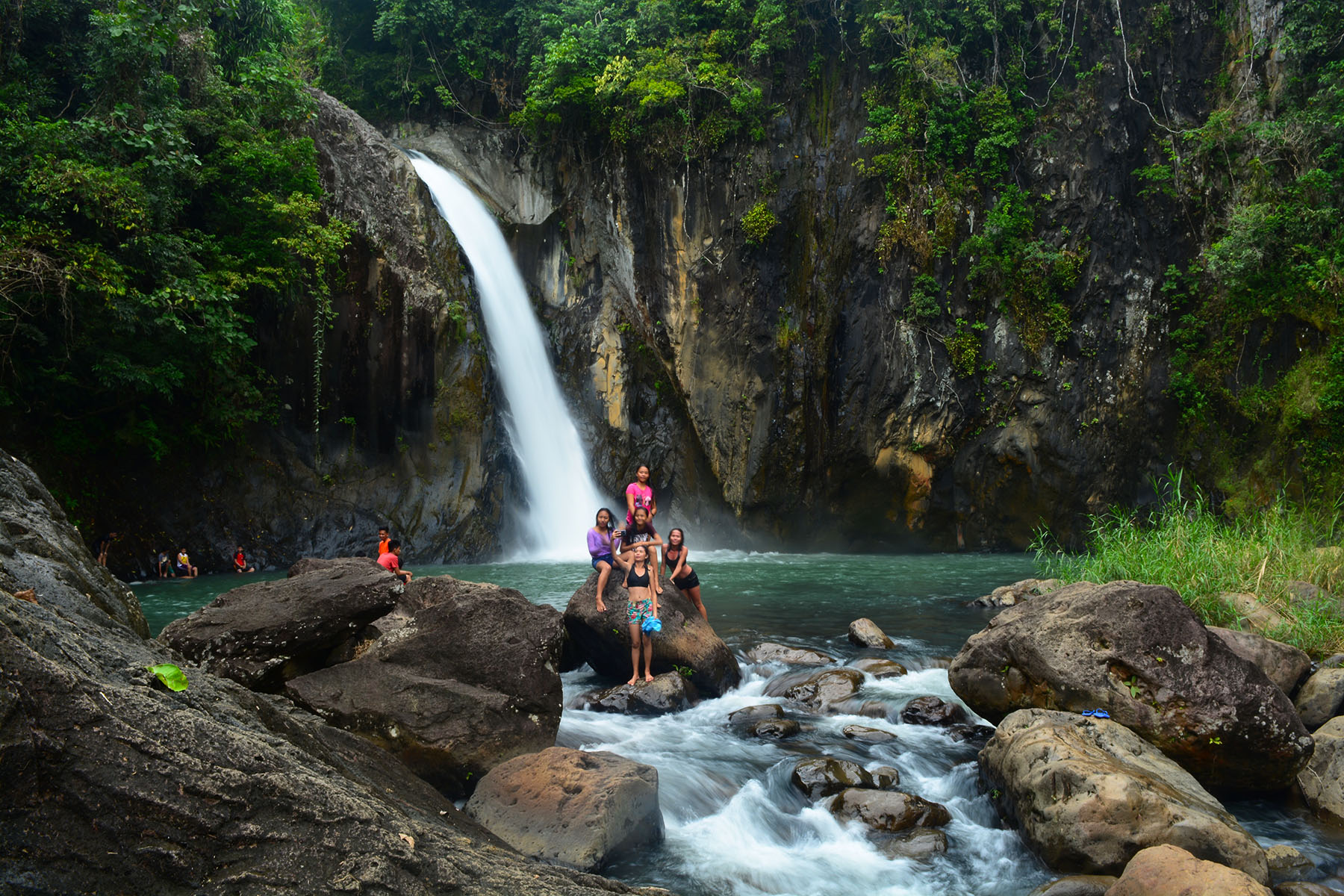
The site offers several day tour cottages, making it easy for tourists to navigate since all areas are connected by concrete footpaths. The only challenging part is getting close to Tinago Falls, as you will need to maneuver around large rocks and contend with the strong current of the water flowing from the main basin.
Tinago Falls is truly stunning. Its cascading water, which falls from a height of 30 to 50 feet into a spacious basin, is both relentless and powerful. The surrounding rock formations enhance its beauty. This waterfall received its name because, before its development, it was tucked away beneath a lush forest and massive rocks, limiting access from the outside world. Such beauty was never meant to be hidden forever, much like the other Tinago Falls I know of in Iligan.
HOW TO EXPLORE ALL THESE
There is no direct transportation to each of the waterfalls, as most are located beyond the communities up in the mountains. The first waterfall I visited was Bagongbong Falls, right after disembarking from the boat at Kawayan Port, returning from Sambawan Island.
The journey to the falls was quite an adventure. For over twenty minutes, we navigated winding mountain roads, passed narrow paths near local houses, and tackled a steep, slippery ascent. The ride was exhilarating, but the real challenge began with the 30-minute trek to the falls, made even tougher by occasional drizzles.
From the point where we parked the motorcycle, I could already hear the sound of rushing water, a melody that echoed in my ears as we approached the entrance to the falls. To hire a motorcycle (habal-habal), some drivers charge a rate of P400 per waterfall, which can be pricey, but you can always negotiate the price. I managed to get mine for P1000 for an entire day of chasing waterfalls. Please note that each motorcycle can accommodate 2 to 3 passengers. If you need a reliable driver, please contact Kuya Alfie Leones at 09261269714.
There you have it, lovelies! Biliran is a beautiful province that deserves further exploration. Start your discovery with these waterfalls. If you enjoyed this post, please share it. Until my next adventure, folks! Ciao!