


The engines roared, the hull groaned, and for a tense few moments, time stood still at the port. Our ferry battled the violent swells, struggling to anchor, before colliding with another vessel in a shower of sea spray and adrenaline. Welcome to Siquijor.
For decades, this tiny island province in the Central Visayas region of the Philippines has carried a reputation shrouded in mystery. Known historically as the Isla del Fuego (Island of Fire) due to the eerie glow of swarms of fireflies at night, it has long been associated with sorcery, witchcraft, and traditional folk healing.
But if you peel back the layers of local folklore, you realize the real sorcery of Siquijor isn’t found in a boiling cauldron. Rather, it is woven into its magical beauty, its unbothered serenity, and its deeply rooted Spanish-colonial historical spots. It is the land of healers, making it a perfect place to heal from the burnout of modern life.
And here is the ultimate plot twist, you can still thoroughly enjoy this paradise even under the shadow of a typhoon. While traveling during a tropical storm isn’t exactly something I look forward to, finding yourself in that situation forces you to see an island’s true character. If you find yourself in the same boat as us, this Siquijor 3-day itinerary will show you how to transform a rainy, chaotic trip into an unforgettable island adventure.
OUR SIQUIJOR 3-DAY ITINERARY
Day 1: Braving the Storm and Discovering San Juan’s Culinary Charm
→Surviving a typhoon landfall
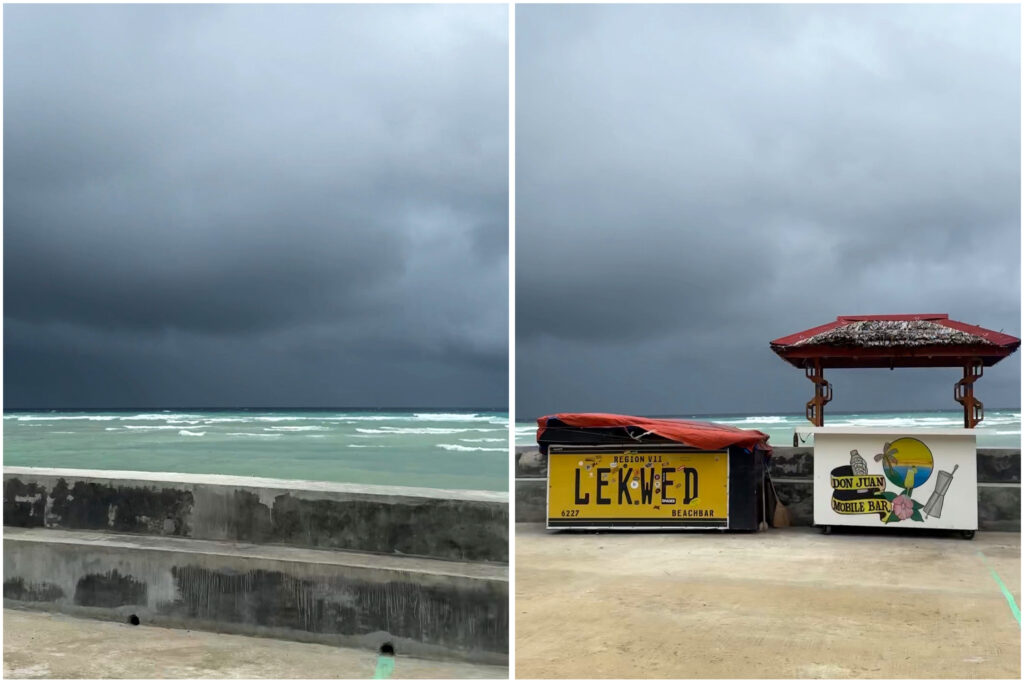
Arriving in Siquijor during a typhoon landfall is a masterclass in testing your travel nerves. We had just come from a relentlessly rainy 3-day stretch on Bantayan Island, desperately crossing our fingers for clearer skies in the south. But nature had other plans. The typhoon threw a curveball, shifting its trajectory to make landfall over Luzon, but its massive, brooding radius effortlessly swallowed a massive chunk of the Visayas as well.
As our ferry violently slammed against the pier, the ocean’s raw, untamed power was on full display. Yet, the exact moment our feet touched solid ground, the anxiety melted away. It became immediately clear that even under a stormy shroud, Siquijor exudes a resilient, incomparable beauty that no amount of rain could ever wash away.
The wild waves crashing against the shores of San Juan didn’t look dreary. Instead, they gleamed in a vibrant, moody turquoise under the heavy stormy clouds. It was a dramatic, beautiful welcome that set the tone for a trip defined by flexibility and pivot planning.
Before diving into the day, we dropped our bags off at our accommodation. Instead of booking the usual beachfront resorts, we opted for a hostel situated uphill. Built out of native materials, our cozy A-frame house offered the perfect balance. It was easily accessible from the main road, but tucked away enough to provide absolute peace, quiet, and a rustic sanctuary from the howling winds.
→Pivoting from beaches to a San Juan food trip

Our original plan was to head straight to the famous Paliton Beach, followed by a quick trek to the island’s interior waterfalls. However, the municipality closed all public beaches and waterfalls for safety. With San Juan’s main coastal attractions temporarily off-limits, we turned to what we love doing most when outdoor plans fall through: a local food trip.
To kick off our culinary detour, we sought comfort in a local gelato shop, Kalipay Snack Corner, indulging in rich, creamy scoops that made us forget the gray skies outside. To warm ourselves up after the chilly ride, we moved on to a cozy café for a serving of freshly made crepes paired with hot, robust coffee.
While driving through the town, we found ourselves mesmerized by the San Juan Plaza. Right at its center, a public pool filled with crystal-clear, natural spring water takes center stage. It was fascinating to see locals going about their day around this pristine water source. Too bad that throughout our stay, we never got to bathe in it, but it was always a lovely, comforting sight whenever we passed by.
→Rainy drives, power outages, and a midnight birthday celebration

In the afternoon, we caught a brief break in the downpour and spent some time at Candanay Sur Beach, watching the moody tide roll in. The peace was short-lived, as the heavy rain returned for our drive back to San Juan. Navigating the coastal roads in the pouring rain was an adventure in itself, made even more dramatic when we entered the town, only to find it pitch-black due to an island-wide power outage.
But a blackout cannot ruin a good night. We adapted, embraced the darkness, and spent the evening drowning a bottle of Alfonso brandy.

We paired our drinks with smoky grilled pork from a local roadside grill house, topped with crunchy, fresh cucumbers from a friendly local market vendor. It was simple, intimate, and absolutely perfect. By midnight, the rain softened, and we celebrated my birthday with a modest cake, a single flickering candle, and a quick, laughter-filled photoshoot in our native A-frame cabin.
Day 2: Cliffs, Heritage Sites, and a Perfect Sundown
→Ambience vs. flavor: starting the day at Tawhay Resto Cafe
We kicked off day two hoping for clearer skies and a hearty breakfast at Tawhay Resto Cafe. The café instantly won us over with its gorgeous ambience and aesthetic layout. However, while the visual vibes were immaculate, the food itself was unfortunately not to our liking. The coffee was somehow okay, serviceable enough to wake us up. Still, the real winner of the morning was the hot chocolate ordered by Pani, who absolutely loved its rich, comforting local flavor.
→Cliff views and hidden cafés

With the beaches still closed for swimming, we spent the morning doing the next safest option, exploring cliffside properties and established resorts that offered secure viewing platforms of the roaring ocean. Our first stop was Pitogo Cliff. Standing on the edge of those rugged limestone rock formations, watching the deep blue waves collide violently with the walls below, was a breathtaking reminder of Siquijor’s raw, untamed topography. Instead of running from the spray, we stood our ground, letting ourselves get completely soaked by the exploding sea foam. It was exhilarating, a literal baptism by the island’s wild elements.
From there, we drove further up the winding mountain roads to Bucafe, a highly recommended mountain-view café known for its panoramic vistas of the island’s lush canopy. While we enjoyed the breathtaking scenery during the drive up, the café itself was completely packed. Unable to secure a seat due to the holiday and weather crowds, we took in the views and drove back down to the town of San Juan to grab a local lunch.
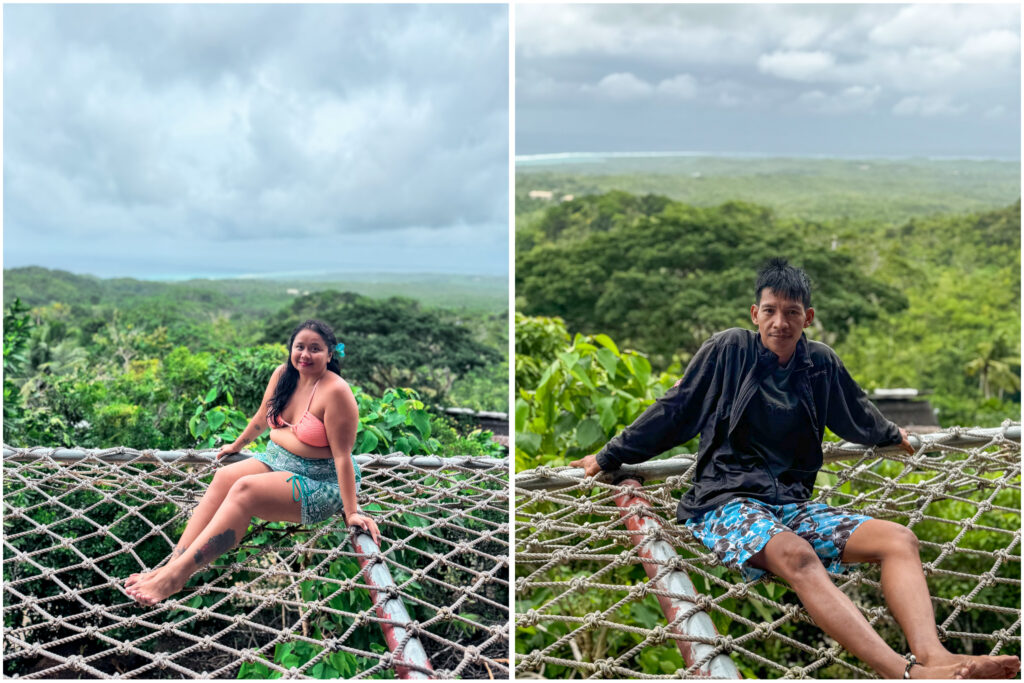
After lunch, we made a quick pit stop at our hostel for a change of clothes before driving over to the municipality of Lazi. Our primary target was the famous Cambugahay Falls, but upon arrival, we discovered it was still closed for safety reasons due to high water levels from the previous day’s typhoon runoff. Not letting the closure dampen our spirits, we redirected our attention to Lazi’s remarkable historical core.
→Step back in time: the heritage of Lazi
We explored the San Isidro Labrador Parish Church, famously known as Lazi Church. Erected in 1884 by Augustinian Recollects, this structure stands as a striking testament to Spanish-colonial heritage, crafted from sea-borne coral stones and dense local hardwood. Walking inside feels like stepping into a living museum.
When I first laid eyes on it back in 2015, it broke my heart to see it so worn down and neglected. Returning years later, it was a massive relief to see the fruits of the community’s petition for its restoration. The church now stands prouder and structurally sounder, though a part of me still misses that raw, weathered patina. Time really has a way of giving old ruins a very different kind of charm.
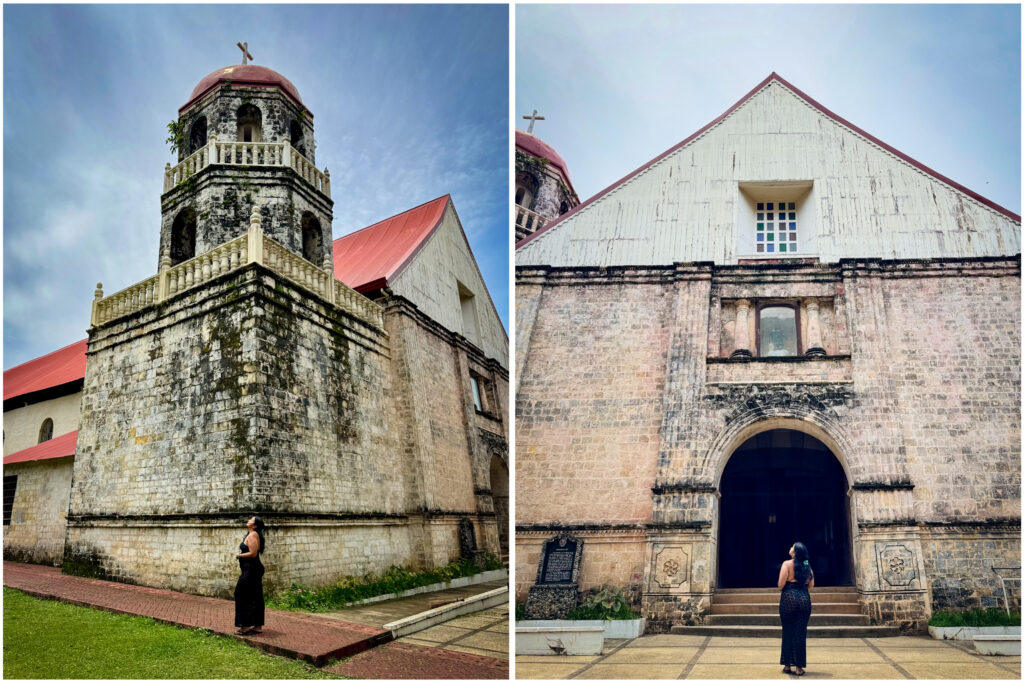
Directly across the street sits the iconic Lazi Convent. This massive, imposing structure is widely recognized as one of the largest convents in all of Asia, defined by grand, sweeping wooden staircases and a heavy, mesmerizing historical aura. Loving vintage architecture the way I do, places like this never cease to amaze me. They wrap you in a profound, almost overwhelming sense of nostalgia. I couldn’t resist leaning into the island’s mystical reputation here, playfully creeping through its shadowed corners like a resident witch.
→Footspa at the enchanting balete tree
Right down the road from Heritage Square sits the iconic Old Enchanted Balete Tree. This 400-year-old giant is legendary for its massive hanging roots and the natural spring flowing directly beneath its base. We spent an hour here enjoying a relaxing foot spa, letting the not-so-tiny doctor fish nibble at our tired feet in the cool spring water.
→Sunset triumphs and kinilaw feasts
As late afternoon approached, we raced back to San Juan, pulling up near CocoRico just in time for sunset. For the first time since we landed on the island, the heavy storm clouds parted at sundown, treating us to a brilliant, fiery golden hour over the ocean. We celebrated the sight with cold drinks in hand, watching the sky change from orange to deep purple.
For dinner, we decided to check out the local nightlife and walked into Hiraya Beachfront. It turned out to be the best dining decision of our trip. We ordered their fresh Kinilaw (a Filipino-style ceviche featuring raw cubed fish marinated in vinegar, citrus, ginger, and chilies). It was expertly balanced, exceptionally fresh, and hands down the best kinilaw on the entire island.

Day 3: Chasing Waterfalls, Man-Made Forests, and Bittersweet Goodbyes
→Beating the crowd at Cambugahay Falls
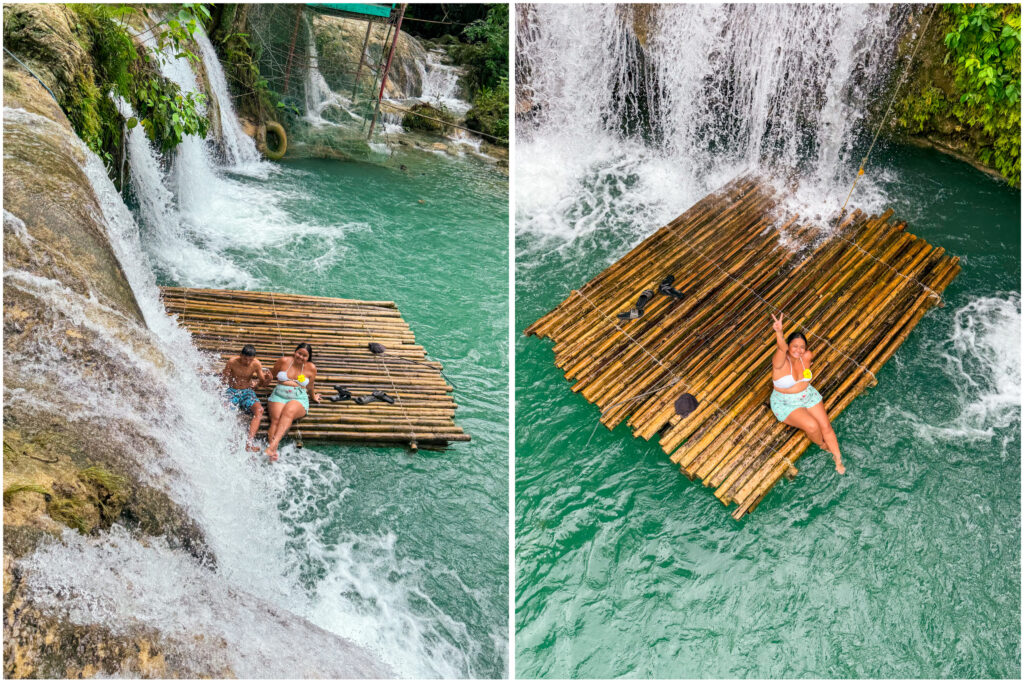
Our final day started with a bright and sunny morning, a welcome contrast to the stormy weekend. We had breakfast at Fig Cafe, fueling up on great coffee and hearty breakfast bowls, before hitting the road immediately.
Our destination? Cambugahay Falls. Having finally reopened, we wanted to get there early to enjoy the site before the mid-day tourist crowds arrived.
I’ve been to Siquijor before and have already tried the famous monkey rope swing and the various photo-ops that frequently make the rounds on social media. This time around, I didn’t care for the stunts. All I wanted was to sit back and look at Cambugahay Falls for its magical, tiered, turquoise beauty.
But the unexpected highlight of our morning wasn’t the water at all. It was discovering a local vendor selling crisp slices of green mango dipped in savory, salty alamang (shrimp paste). Munching on sour mangoes while staring at a majestic waterfall turned out to be the real draw of the morning.
→Navigating Salagdoong beach and the man-made forest
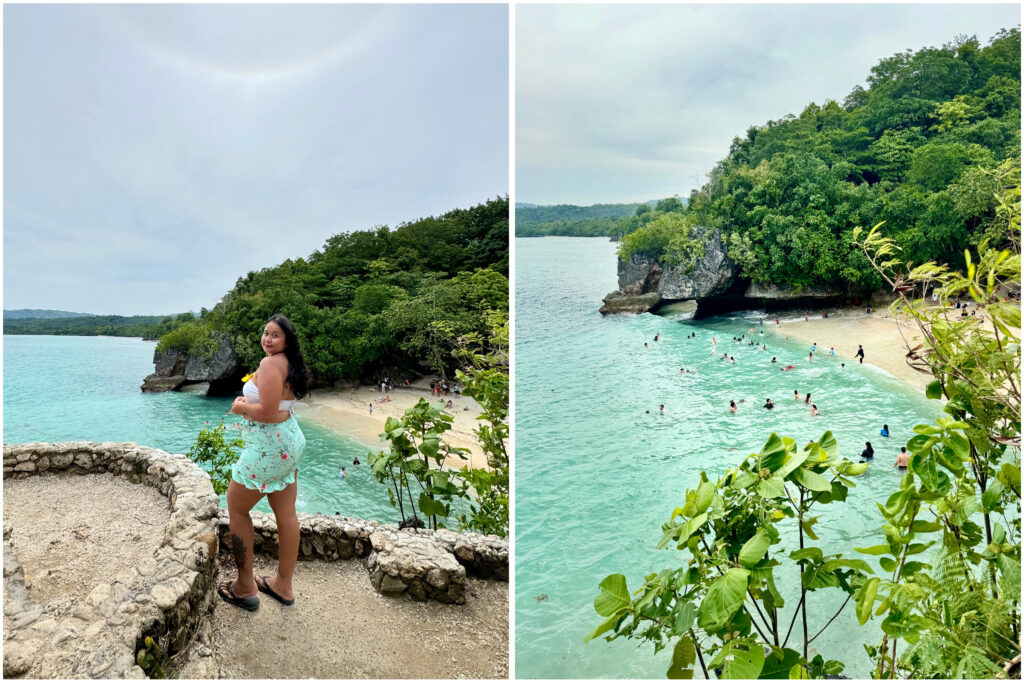
Since the smaller interior waterfalls around Lazi remained closed due to lingering high-water alerts, we drove further east toward Maria to visit Salagdoong Beach. This was another nostalgic spot I had been longing to see again.
To get to the beach, you have to drive through the famous Siquijor Man-Made Forest. The long stretch of towering mahogany trees arches perfectly over the highway, creating a cool, shaded canopy. It was mesmerizing, looking exactly how I remembered it from years ago.
We originally planned to find a secret pocket beach nearby and drop by the Olang Marine Sanctuary for a bit of snorkeling. However, the temperamental tropical weather caught up with us, and it started raining heavily once more. Taking it as our cue to head back west toward the port, we turned our motorcycles around.
→Final pit stops and the Graveyard Restaurant

On our way back to San Juan, we dropped by Hapitanan, a famous roadside stopover known for its quirky photo spots (like posing on a broomstick like a witch). We skipped the gimmicks and went straight for their delicious flavored crepes and hot brewed coffee to shield ourselves from the damp weather. We also made sure to take plenty of candid photos to remember the road trip by.
Back in town, we spent our remaining afternoon hours relaxing at Cliff Garden and Cottages, enjoying the sweeping coastal views from a safe, dry vantage point. For our final meal on the mystical island, we dined at The Graveyard Restaurant, a uniquely themed spot in San Juan known for its quirky name, cozy ambiance, and excellent comfort food. It was a fittingly eccentric end to our trip. By 5:00 PM, with our bags packed and memories secured, we found ourselves aboard the outbound ferry, heading across the Bohol Sea back to Dumaguete.
HOW TO GO TO SIQUIJOR
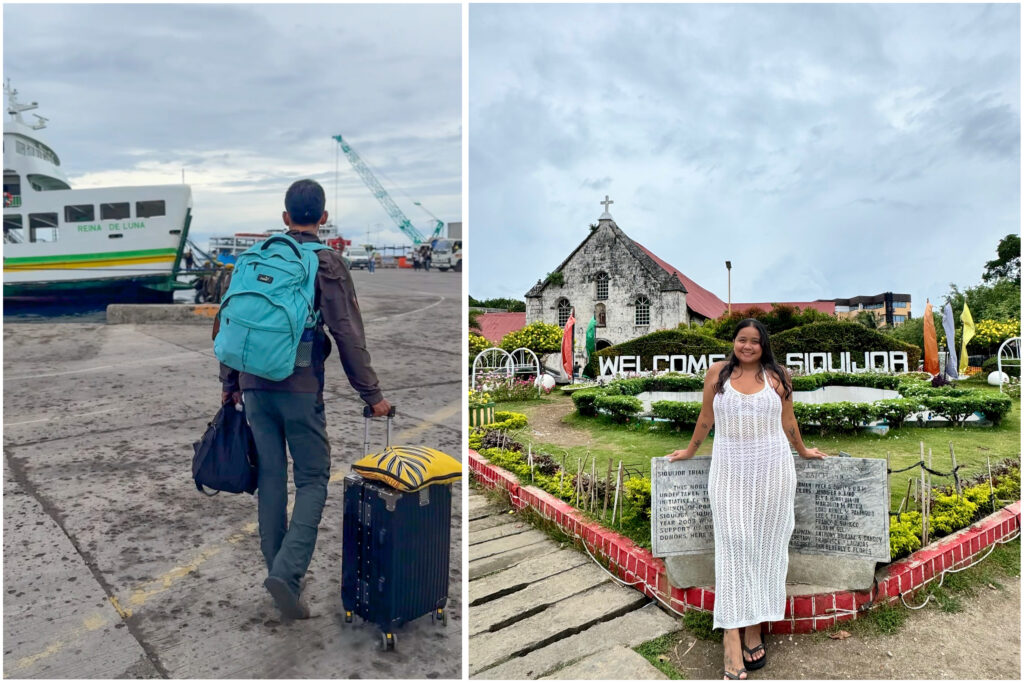
Siquijor was long known for being exclusively accessible by water, but reaching this mystical island has become significantly easier. While most travelers still arrive via passenger ferries from nearby hubs like Dumaguete or Bohol, Sunlight Air now operates direct commercial flights from Cebu straight into Siquijor Airport. If you prefer to skip the ferry waves entirely, a quick 55-minute flight from Mactan-Cebu International Airport is your best shortcut to paradise.
How to Get to Siquijor from Manila
-
-
-
-
-
- Fly to Dumaguete: Book a direct domestic flight from Manila (MNL) to Dumaguete Airport (DGT). The flight takes approximately 1.5 hours.
- Go to the Port: Upon exiting the Dumaguete Airport terminal, hail a tricycle or book a private taxi to take you to the Dumaguete Sea Port. The ride takes about 10 to 15 minutes and costs around ₱100 to ₱150 depending on your negotiating skills.
- Board the Ferry: Buy a ticket for a fast craft ferry (OceanJet or Montenegro Lines) heading to Siquijor. The boat ride takes about 50 minutes to 1 hour to reach either the Port of Siquijor or the Port of Larena.
-
-
-
-
How to Get to Siquijor from Bohol
-
-
-
-
-
- Via Tagbilaran: If you are coming from the island of Bohol, head to the Tagbilaran Fastcraft Terminal. OceanJet operates daily direct ferry routes from Tagbilaran to Siquijor. The journey takes approximately 1.5 to 2 hours.
-
-
-
-
How to Get to Siquijor from Cebu
-
-
-
-
-
- The Direct Flight Route (The Fastest Shortcut): You can now bypass the ferry ports entirely by booking a direct flight with Sunlight Air from Mactan-Cebu International Airport (CEB) straight into Siquijor Airport (IQR). The flight takes only about 55 minutes, making it the most convenient option for travelers looking to maximize their island time.
- The Fast Craft Route (Via Tagbilaran): Take a ferry from Cebu Pier 1 to Tagbilaran, Bohol, and then transfer to the Siquijor-bound ferry.
- The Direct Ferry Route: Several larger shipping lines (like Lite Shipping or Cokaliong) operate direct, long-haul overnight vessels from Cebu City to Larena, Siquijor on select days of the week. This option takes roughly 5 to 7 hours.
- The Southern Cebu Overland Route: Take a Ceres bus from the South Road Property (SRP) or South Bus Terminal in Cebu City heading to Bato/Liloan Port in Santander (approx. 4-5 hours). Take a short ferry over to Sibulan, ride a tricycle to Dumaguete Port, and board the final ferry to Siquijor.
-
-
-
-
SIQUIJOR 3-DAY ITINERARY BUDGET SUMMARY
To give you a realistic idea of travel expenses, here is a breakdown of what a typical 3-day itinerary costs for a mid-range traveler (excluding flights and ferry tickets to the island hub).
| Expense Category | Estimated Cost (PHP) | Notes |
| Accommodation | ₱1,500 – ₱3,000 / night | Native A-frame hostels to mid-range beach resorts |
| Scooter Rental | ₱300 – ₱500 / day | Fuel costs around ₱150 for the entire 3 days |
| Food & Dining | ₱600 – ₱1,200 / day | Mix of local carinderias, cafés, and beachfront dinners |
| Fees & Activities | ₱300 – ₱500 total | Balete tree entry, waterfall access, and parking fees |
| Total Est. Budget | ₱5,500 – ₱10,500 | Based on solo or twin-sharing travel preferences |
THE IDEAL SIQUIJOR 3-DAY ITINERARY
| Day | Time | Activity / Stop | Highlights & Pro-Tips |
Day 1: San Juan Core & Sunset |
09:00 AM | Island Arrival & Vehicle Rental | Grab a scooter (₱300–₱500/day) or a private car/tuk-tuk right outside the Siquijor Port gates. |
| 10:00 AM | Basecamp Check-in | Drop off your bags at your San Juan beachfront resort or uphill native A-frame to ride light. | |
| 10:45 AM | San Juan Plaza Spring Pool | Take a quick walk around the town center and see the natural, crystal-clear public spring pool. | |
| 11:30 AM | Pitogo Cliff | Stand on raw limestone cliffs, watch massive blue waves smash below, and enjoy the coastal spray. | |
| 12:30 PM | Instagrammable Resort & Lunch | Tour Coco Grove or U Story Resort pathways. Head to Dagsa Resto Bar for highly rated wood-fired pizza and fresh seafood curries. | |
| 02:30 PM | Lugnason Falls | Trek into the jungle to leap off the rock ledges of Lugnason and explore the surrounding “Zodiac Springs.” | |
| 04:30 PM | Skyline Coffee at Bucafe | Wind up the mountain roads for hot drinks and panoramic bird’s-eye views of the island’s lush forest canopy. | |
| 05:30 PM | Paliton Beach Sunset | End your day at “Little Boracay.” Relax under leaning coconut trees with a cold drink as the sky turns fiery orange. | |
Day 2: Lazi Heritage & Highlands |
08:00 AM | Breakfast at Fig Cafe or Swakihan | Fuel up with artisan coffee and a hearty breakfast bowl before heading to the south side. |
| 09:15 AM | 400-Year-Old Old Balete Tree | Sit among massive hanging roots and dip your feet into the natural pool for a ticklish doctor fish foot spa. | |
| 10:15 AM | Cambugahay Falls & Secret Pools and waterfall hopping | Swim early in the tiered turquoise pools to beat the crowds. Buy fresh green mangoes with salty alamang from local stairway vendors! | |
| 01:00 PM | Lunch & Lazi Heritage Tour | Eat in Lazi town, then explore the 1884 coral-stone Lazi Church and the massive timber halls of Lazi Convent (one of Asia’s largest). | |
| 03:00 PM | Crepes & Broomsticks at Hapitanan | Stop for delicious flavored sweet crepes, hot brewed coffee, and the iconic, fun “flying broomstick” photoshoot. | |
| 04:30 PM | Sunset Dip near CocoRico | Ride back to San Juan and plunge into the ocean for a late afternoon swim as the golden hour settles. | |
| 07:30 PM | Night Drinks at Hiraya Beachfront | Unwind under the stars with cold beers and order a bowl of their fresh, lime-and-chili marinated Kinilaw (ceviche). | |
Day 3: The Wild East & Sanctuaries |
08:30 AM | Breakfast at Shaka or Mr. Crepe | Grab a nutrient-packed smoothie bowl or a sweet morning crepe to fuel your trip to the eastern loop. |
| 09:30 AM | Siquijor Man-Made Forest | Drive through a mesmerizing highway tunnel formed by towering, canopy-arched mahogany trees. | |
| 10:15 AM | Salagdoong Beach & Cliff Diving | Climb the rocky crags to brave the famous 7-meter and 10-meter diving platforms straight into crystal-clear waters. | |
| 12:30 PM | Coastal Lunch & Marine Sanctuary | Grab fresh seafood, then snorkel out from the shore at Olang Marine Sanctuary to see giant clams and vibrant coral reefs. | |
| 03:00 PM | Hunting for the Secret Beach | Spend your final island hours scouting hidden pocket beaches and quiet limestone coves for a crowd-free swim. | |
| 05:30 PM | Port Return & Pack Up | Head back to your accommodation to grab your luggage, settle environmental exit fees, and return your vehicle at the pier. | |
| 07:00 PM | Outbound Ferry Departure | Step aboard the evening ferry out of Siquijor Port as the twinkling lights of the Isla del Fuego fade into the horizon. |
USEFUL TIPS FOR A HASSLE-FREE SIQUIJOR 3-DAY ITINERARY
Siquijor is an absolute dream of an island, but because it balances untouched charm with rapidly growing popularity, a little tactical planning goes a long way.
Here is a practical breakdown of logistical tips, seasonal realities, and transit essentials to ensure a seamless trip.
1. Getting around: Two wheels, three or four?

Siquijor balances untouched charm with growing popularity, making tactical planning essential. The island is encircled by a smooth, scenic circumferential road that takes about two to three hours to complete. Choosing your transport determines your flexibility:
-
-
-
-
-
- Motorcycle rental: If you know how to ride, renting a scooter is the gold standard for exploring on your own timeline. Expect to pay around ₱300 to ₱400 per day, excluding gas.
- The tricycle alternative: If riding on two wheels isn’t your thing, hire a local tricycle or modern tuk-tuk driver. You can hire them for a single drop-off or negotiate a full-day island tour rate between ₱1,000 and ₱1,500. Local drivers double as fantastic guides who know the island’s pulse.
- Travel in style with a 4-wheel drive: Renting a self-drive car gives you total freedom when tackling steep interior roads. You can level up your ride with a rugged Suzuki Jimny 4×4. It is the perfect match for navigating winding terrain, giving you the high clearance and capability needed to safely hunt for untouched, hidden spots off the beaten path without breaking a sweat.
-
-
-
-
2. Navigating the crowds & iconic spots

Siquijor’s mystical reputation used to keep mass tourism at bay, but the secret is officially out.
-
-
-
-
-
- Avoid peak season: To experience the island’s true, tranquil charm, avoid the peak dry season months of March through May, as well as major holidays like Holy Week and Christmas. Visiting during the shoulder months offers a much quieter experience.
- Secure the hotspots: For legendary locations like the multi-tiered Cambugahay Falls, arriving right at opening time (around 7:30 AM) is non-negotiable if you want photos without a sea of life vests.
- The trending Instagram spot: If you are looking for that specific, stunning new spot gaining traction, where a rustic gate opens up to a dramatic concrete stairway cutting straight down a coral cliffside, head over to Kawayan Resort. It offers spectacular, unobstructed views of insanely clear turquoise water that looks almost European. Another excellent alternative with a similar panoramic view is Pitogo Cliff. However, both locations can get incredibly crowded, so it’s best to time your visit wisely.
-
-
-
-
3. Where to unwind
Siquijor has stepped up its accommodation game, offering gorgeous spaces that lean heavily into the island’s lush natural topography.
-
-
-
-
-
- Jungle & glamping vibes: For an immersive, bohemian experience, look into boutique properties tucked into the foliage or perched on the hillsides of San Juan. Places like Runik Siquijor (an adults-only cliffside beach club/glamping setup) offer premium tent accommodations with a distinct Asian-Mediterranean aesthetic.
- Resort lounging: If you prefer classic beachfront relaxation, the San Juan coastline is dotted with beautiful resorts where you can transition seamlessly from an infinity pool to a white sand beach for the island’s famous fiery sunsets.
- Mountain Cafes: If you want to escape the coastal rush entirely, head inland to upland spots like Bucafe or La Canopée, which offer a much more relaxed, mountain-cafe vibe to unwind.
-
-
-
-

4. Weather realities – the rainy season buffer
The rainy or Habagat (southwest monsoon) season typically runs from June to October/November. Traveling during this time is entirely doable and much emptier, but it requires flexibility.
-
-
-
-
-
- Crucial warning: Tropical storms or heavy downpours can completely halt sea travel. Coast Guard suspensions are common when waves get rough. Always account for a 1-to-2-day buffer at the end of your itinerary. Never schedule your ferry out of Siquijor on the exact same day as your international flight home from Cebu or Manila.
-
-
-
-
5. Master the ferry schedules
While Siquijor now welcomes boutique commercial flights via Sunlight Air from Cebu, arriving by sea remains the primary and most flexible mode of transportation for most travelers. The absolute main gateway is Dumaguete City, though the island is also highly accessible via direct ferry connections from Bohol (Tagbilaran) and Cebu City.
| Route | Main Operators | Frequency / Notes |
| Dumaguete ↔ Siquijor | OceanJet, Montenegro Lines, Aleson Shipping | High frequency. Fast crafts (OceanJet) take ~45 mins; RoRo cargo ferries take 1.5 to 2 hours. Runs from early morning until around 5:00 PM. |
| Bohol (Tagbilaran) ↔ Siquijor | OceanJet, Lite Ferries | Usually 1-2 trips daily. Fast craft takes roughly 1.5 hours. Perfect for island-hopping. |
| Cebu City ↔ Siquijor | OceanJet | Typically a once-daily fast craft that transits via Tagbilaran, Bohol. Total travel time is around 4.5 hours. |
Note: Ferry schedules can change with very little notice due to maintenance or weather conditions. Always verify departure times at the pier terminal a day in advance or check the operators’ official social media pages for real-time schedule updates.
WHERE TO STAY IN SIQUIJOR
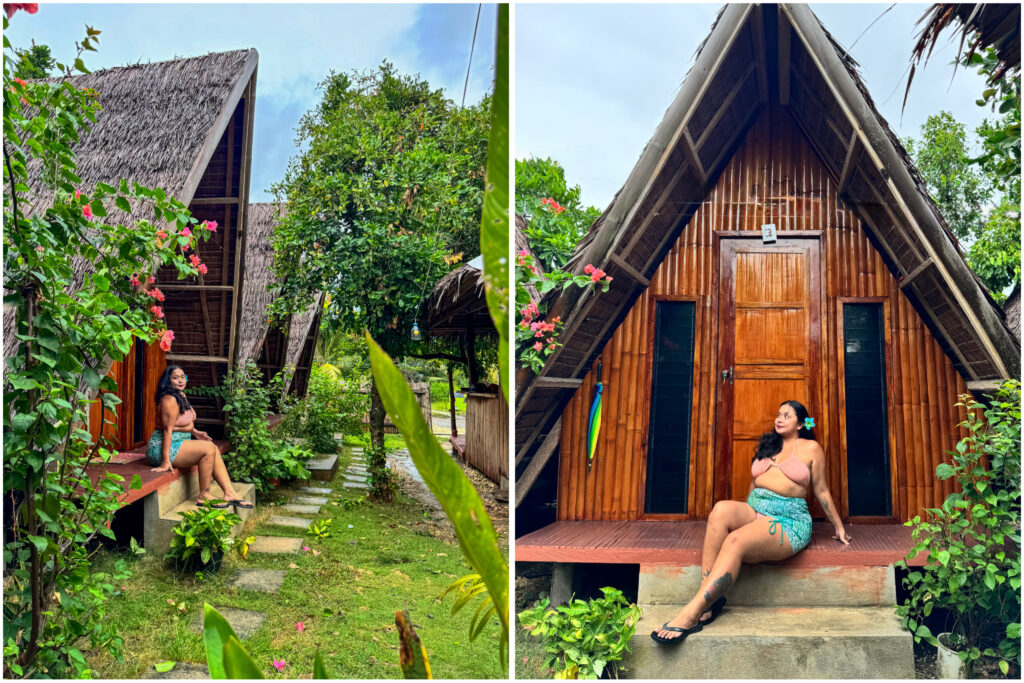
Choosing where to drop your bags for your Siquijor 3-day itinerary comes down to the exact vibe you want to wake up to. Instead of hunting through endless, identical hotel names, it is much easier to choose by accommodation style and geographic zone.
Here is a breakdown of how Siquijor’s stay options stack up across the island:
West coast beachfront resorts (The San Juan strip)
If you want to walk straight out of your room onto the sand, this is your zone. Positioned on the vibrant southwestern coast, these properties range from sprawling, classic tropical sanctuaries with multiple pools to smaller, stylized boutique resorts.
-
-
-
-
-
- The vibe: Lively but relaxed, highly convenient, and front-row seats to the island’s legendary golden hour sunsets.
- Best for: First-time visitors, divers, and foodies who want to walk or take a two-minute scooter ride to the island’s best cafes and restaurants.
-
-
-
-
→Find your dream island resort here
Upland jungle lodges & native eco-cottages (The hills of San Juan)
Perched on the lush ridgelines overlooking the ocean, the island’s interior has seen a massive boom in unique, architectural eco-stays. Think luxury safari-style glamping domes, minimalist open-air A-frames, and upscale bamboo treehouses tucked into the forest canopy.
-
-
-
-
-
- The vibe: Deep nature immersion, cooler mountain breezes, absolute privacy, and panoramic bird’s-eye views of the coast.
- Best for: Couples, creative retreats, and travelers looking for a unique aesthetic stay who don’t mind a winding, uphill drive at night.
-
-
-
-
→Find your ideal rustic accommodation here
Quiet southern eco-escapes (Lazi & Maria)
As you move toward the southern and eastern loops near the historic town of Lazi, the accommodation style shifts away from commercial tourism. Here, you will find low-key beach clubs, solar-powered homestays, and small-scale coral stone guesthouses tucked away in quiet coves.
-
-
-
-
-
- The vibe: Raw, unhurried, off-grid island energy where you are surrounded by local fishing villages rather than tourist crowds.
- Best for: Slow travelers and nature lovers who want early, effortless access to Cambugahay Falls and Salagdoong Beach before anyone else arrives.
-
-
-
-
→ Find your quiet southern escape here
Social hostels & backpacker hubs
Mainly clustered around the pockets of San Juan and close to Paliton Beach, the island’s hostel scene is incredibly vibrant. These spaces lean heavily into native architecture, using nipa, bamboo, and open-air common areas, complemented by modern comforts like air-conditioned dorm rooms.
-
-
-
-
-
- The vibe: Social, budget-friendly, and highly community-focused, often featuring family-style dinners or acoustic sunset sessions.
- Best for: Solo travelers looking to swap stories, share the cost of a tricycle tour, or find a riding buddy to explore the interior.
-
-
-
-

Siquijor has a way of working its magic on you when you least expect it. It teaches you to slow down and to appreciate the dramatic hues of a stormy sky. If you enjoyed this article, feel free to share it with your friends and start planning now. For questions, drop them in the comments. Until next time. Ciao!
Discover more from A Wanderful Sole
Subscribe to get the latest posts sent to your email.